


Roberta Bayley
The legendary rock photographer recalls the photoshoot that produced one of the most iconic album covers
source: SPIN: TINA EVES
MCQMUSICMONTHLY
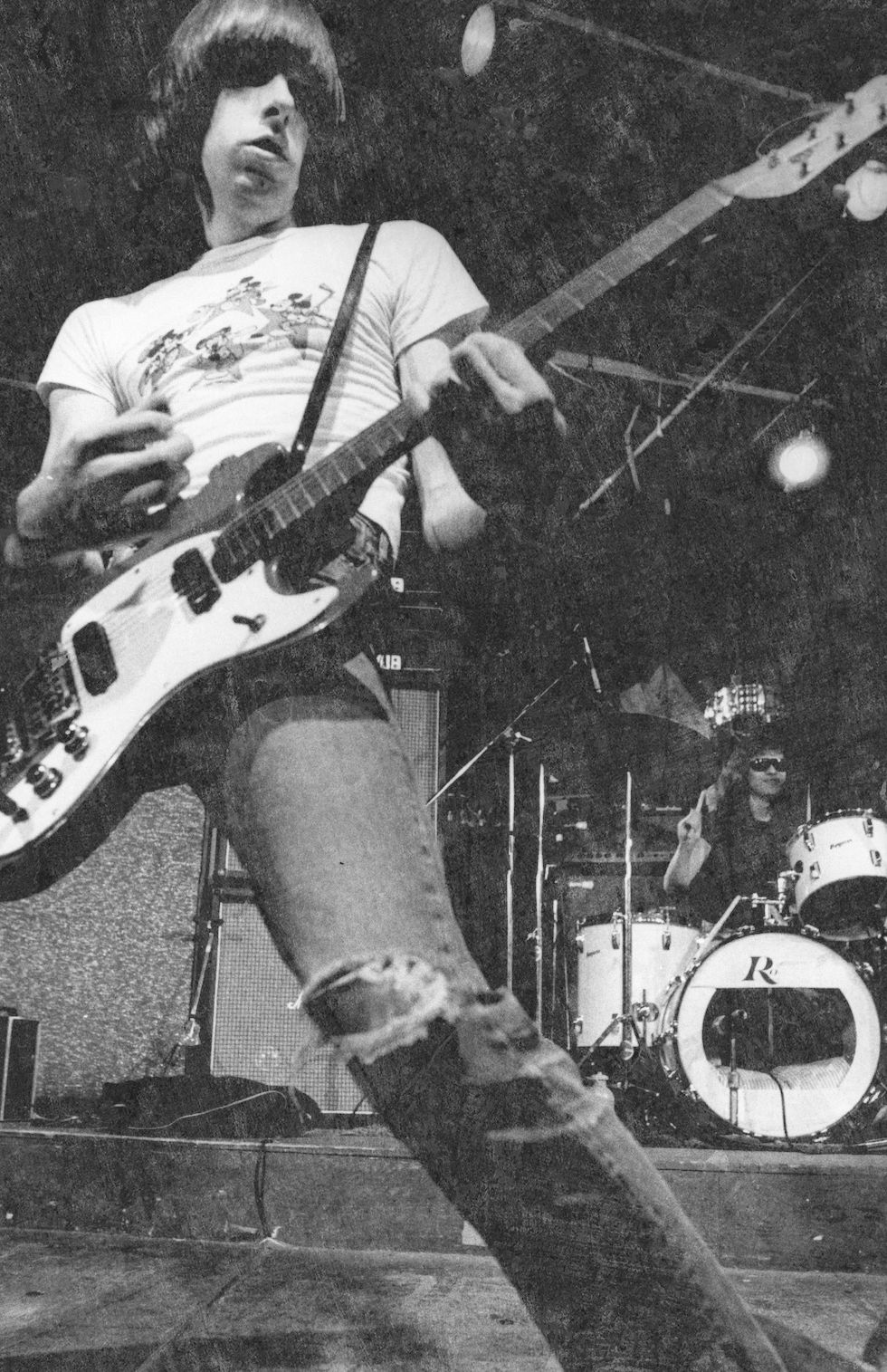
Roberta Bayley had only been taking photos for a month and a half when she ended up shooting the Ramones for the cover of their eponymous debut album. At the time, the band’s label, Sire Records, hired a well-known photographer to shoot the cover, but the band and then-manager Danny Fields weren’t fans of the Hollywood-polished shots. Luckily, Bayley had shot the band just a few days earlier. And the rest is punk rock history.
Then a recent New York City transplant, by way of her hometown of San Francisco and a three-year segue in London, Bayley became a stalwart at CBGB, working the doors from 1974 through 1978 and photographing everyone who blazed through the club and on stage: Blondie, the Talking Heads, Richard Hell and the Voidoids, Johnny Thunders and the Heartbreakers, Patti Smith, Television, Iggy Pop and the Stooges, the Clash, the Damned, and the Dead Boys.
By the time Ramones was ready for release, they had their cover, a photo Bayley took for Punk magazine using a $300 camera. Sire then paid her a flat fee of $125 (her rent at the time) for the image.
Accompanied during the shoot by Punk magazine co-founders John Holmstrom and Legs McNeil, along with the band’s friend and artistic director Arturo Vega—who housed Dee Dee and Joey Ramone at his nearby loft and created the band’s iconic logo and merchandise—Bayley photographed the band against a graffiti-stained brick wall outside a community garden on East 2nd Street in the East Village.
“It wasn’t supposed to be their album cover,” remembers Bayley. “We were just goofing around … so there was no pressure.”
Once you moved from London and made your way to New York, how did the New York Dolls become your gateway into the entire scene in the city, and what was happening at CBGB?
It was a bit of a journey in and of itself. When I came to New York, I literally did not know anyone. I found two friends from San Francisco, where I grew up, who lived in Brooklyn, and stayed with them for a while. People in London had given me a list of people to look up in New York, so this one guy took me to see the New York Dolls. He was a roadie and sound engineer, and had worked with the Dolls in France. He had a party at his loft, which happened to be directly upstairs from the club where they were playing after the show, so I met a couple of people there, and they started to ask, “What do you want to do? How about going to see Television? How about going to see Patti Smith?” So I kind of just went with it.
I didn’t realize there was any particular New York scene, but I definitely heard of the Dolls. After I’d been here for a few months, I met Richard Hell and became his girlfriend, and he was in the band Television at the time, and that’s how I ended up at CBGB. I first went to CBGB at the very beginning of the scene.
Is that where you first saw the Ramones?
It was the end of ’74 when “punk” bands started playing at CBGB, but Richard and I went to see the Ramones at their rehearsal space, Performance Studios, when they were doing these little showcases, and that’s when I met them. I eventually became good friends—and still am—with Dee Dee’s girlfriend at the time, Pam Tent, who was a singer with a group from San Francisco, the Cockettes. Then I started working at the club [CBGB] regularly, at the doors, so I met all the bands this way, since I would take their guest list, let their friends in, and let them in.
I realized there was this little musical scene going on, and all these disparate new original bands playing their own music were coming up. It was very small. There weren’t many people at all, but they were all on the same kind of wavelength.
thought it was all so interesting, so I bought a camera.
What camera did you use to shoot the Ramones?
t was a Pentax Spotmatic that I bought used for $300 at Camera Barn across the street from Macy’s. David Godlis also used that camera. I think it was a popular 35 millimeter for beginning photographers. Maybe it was just a cool camera to have at the time. Not long after that, I traded my camera in for an Olympus, which Bob Gruen had started using. They were Japanese, and I liked the fact that they had a very small body, all the lenses were interchangeable, and everything was very compact. I used Olympus for the rest of my career.
Was it difficult finding a darkroom to develop all of the photos you started taking at CBs?
I got really lucky in my first few months of taking pictures and had this friend, Jamie Moses. Somebody had left a darkroom at his apartment on Christopher Street, and he said, “Do you want to borrow it?” When he saw the whole thing take off and realized I was using it to good advantage and regularly, he just gave it to me. Without a dark room, I don’t think anything would have happened. I couldn’t afford a dark room at that time, and I had somebody show me how to set it all up.
Part of the magic of the Ramones cover is that it wasn’t digital, which captured the urban decay, the grit of the city and of the band at the time.
I just took photos of stuff I was really interested in, and people I was interested in. I never got completely into digital, and I pretty much lost interest in the music scene anyway. So I wasn’t taking pictures by the time digital came along. I did buy a digital camera to dip my toes into it, but it just never really clicked for me. I still have a very expensive digital camera that I literally never use.
After Sire had already commissioned a photographer and the band rejected the photos, how did they land on that particular photo of yours from the Punk magazine shoot for the cover?
The record was just about to come out, so they needed a cover, and they didn’t have the budget to hire a new person to do it, so they were reaching out to the photographers they knew had photographed the band. They were still a pretty new band and had only been together for a little over a year and didn’t have a record or anything, so the only other main photographers that I was aware of that had pictures of them were Bob Gruen and Danny Fields.
They called up everybody and asked to see the contact sheets, and that was the one they liked. They picked that one, and that was it.
You mentioned that there were also some photos you took during that Ramones session of the band smiling that they didn’t want to use.
Sire picked another picture from that session to use for publicity, and they were smiling. They were trying to market them as a cheerful pop group. When Johnny saw that, he freaked out and said, “We’re never showing that picture ever again.” When you look at their official publicity pictures, and all their album covers, there were very few smiles. If you’re lucky, you could see one.
Most bands were like that. The Beatles didn’t really smile, and the Rolling Stones certainly didn’t. They wanted to be taken seriously.
And all of this was happening before “punk” was even used to describe the genre or part of the scene?
None of the bands called themselves punk. That only came about because of the magazine Punk. The word punk was an insult word, like “You dirty punk.” Gangsters used it. Clint Eastwood used it. “Hey, punk, you feel lucky?” In jail, a punk was a guy who takes it up the ass from another prisoner. It wasn’t a cheerful, complimentary name.
It’s 50 years since you took that photo. What do you think of the Ramones cover now?
I love it. It made my whole reputation, and it’s why you’re calling me today. It even made me famous in South America and Japan. What’s not to like?
There’s not one thing wrong with that photo. That’s my opinion.
It was all an accident. I had been taking pictures for a month, and on that roll of film, there were other excellent photos, many of which they are smiling because we were just goofing around. It wasn’t supposed to be their album cover. We were all just goofing around, around the corner from where they lived, so there was no pressure.
Some of the best things, and art, come from moments like that.
And that’s the kind of photography I like. That’s what I wanted to do, and I was able to do it because I shot a lot of these people before they were famous. They were just my friends. Most of my good photos are of people I knew.
My role model was Astrid Kirchherr. She did all the first photographs of the Beatles, and those are some of the best photos ever taken of them. She continued to pursue photography. I’m retired, but it doesn’t bother me that I don’t still take pictures. It’s just how it worked out.
I wish I’d photographed Prince and Madonna. Aside from that, all the other people that I would have liked to photograph were already dead. But I think I did pretty well with my selection of human beings.
Please view the original SPIN article via the link provided above.
MCQMUSICMONTHLY
FEATURE JULY 2026 - 2026年7月


